gppj-rank

Journal Metrics
 Number of Volumes      3
 Number of Issues      12
 Number of Articles      72
 Time to Accept (Days)      27
 Number of Reviewers      195
 Article View     39851
 PDF Download     68,721


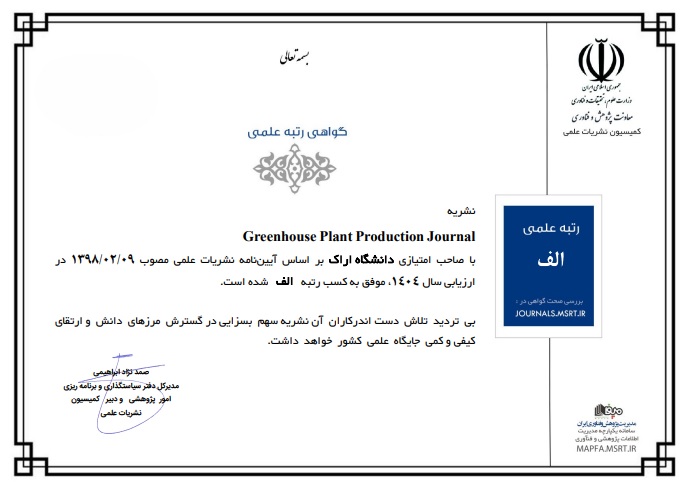
Scientific Rank (Iran Ministry of Science, Research, and Technology): A


Greenhouse Plant Production Journal (GPPJ) is an international, peer-reviewed, open access journal publishing research related to horticultural crops. Articles in the journal deal with protected production of vegetables, fruits, ornamentals and medicinal plants. Papers in related areas (plant physiology, plant nutrition, biochemistry, micropropagation, soil science, plant breeding, phytopathology, etc.) are considered, if they contain information of direct significance to protected horticulture. Basic molecular studies without any direct application in protected horticulture will not be considered for this journal.

  • Types of paper:
    1. Original full papers (regular papers)
    2. Review articles (should cover a part of the subject of active current interest)

    Original papers should report the results of original research and should be of international and not only regional interest. The material should not have been previously published elsewhere. Reviews should cover a part of the subject active current interest. They may be submitted or invited.

This journal has entered into a cooperation agreement with the Iranian Scientific Association of Soilless Cultivation, with the aim of promoting and expanding scientific and research collaboration.


Publisher: Arak University

Language: English

Frequency: Quarterly 

Journal format: Electronic

Review Time: 4-8 Weeks (In average)

The type of arbitration: Double Blind Peer Review

The cost of reviewing, judging, accepting and publishing : Free

Access to the articles of this site and downloading the articles from this journal: Free   

Creative Commons License  This journal is licensed under a Creative Commons Attribution-NonCommercial 4.0 International License.

This journal is following of Committee on Publication Ethics (COPE) and complies with the highest ethical standards in accordance with ethical laws.

To prevent plagiarism, articles received through the Ithenticate are identified.


Effect of Late-Season Defoliation on Vine Cold Tolerance and Chilling Requirement: An Introduction to Greenhouse Grape Production

Effect of Late-Season Defoliation on Vine Cold Tolerance and Chilling Requirement: An Introduction to Greenhouse Grape Production

Pages 1-11

https://doi.org/10.22034/jgpp.2026.741586

Ehsan Totoonchi, Hassan Sarikhani, Majid Rostami, Mohammad Abdoli, Rouhollah Karimi

Abstract The late-season source leaves play a decisive role in the grapevine's cold tolerance and chilling requirements. The objective was to evaluate the effect of manual late-season defoliation on the cold tolerance and chilling requirements of ‘Bidaneh-Sefid’ grapes. Treatments were applied on October 23 via manual leaf removal of the canes at four levels: 1) control (no leaf removal), 2) apical-node defoliation, 3) Basal-node defoliation, and 4) All-node defoliation of the canes. Based on the results, the lowest cold tolerance (highest electrolyte leakage, or EL) as assessed via the EL method was observed in the ‘all-node defoliation’ treatment, whereas the highest cold tolerance (lowest EL) was found in the control vines. The highest levels of glucose, fructose, sucrose, and raffinose were recorded in the control treatment, while the lowest levels of these soluble sugars were observed in the ‘all-node defoliation’ treatment. Similarly, the highest levels of putrescine, spermidine, and spermine were found in the control treatment. Abscisic acid content in the vines subjected to ‘all-node defoliation’ treatment was 28.5% lower than that of the control vines. The highest levels of gibberellin and auxin were observed in the control plants. In the defoliation treatments group, budbreak (time to 50% budburst) occurred 11 days earlier than in the control group. ‘All- node defoliation’ delayed the rate of budbreak. Overall, it was determined that late-season defoliation can reduce cold tolerance in vineyard vines, however, this horticultural practice can be employed to accelerate budbreak following a standard 400-hour chilling treatment for greenhouse grape production.

Effects of Biostimulant Applications on the Morphological Characteristics of Coriander and Parsley under Soil Cultivation System

Effects of Biostimulant Applications on the Morphological Characteristics of Coriander and Parsley under Soil Cultivation System

Pages 12-19

https://doi.org/10.22034/jgpp.2026.741751

Mahdi Bikdeloo

Abstract This study evaluated the effects of two biostimulant applications (soil inoculation with Trichoderma harzianum and foliar spraying of Ascophyllum nodosum seaweed extract) on the morphological characteristics of coriander (Coriandrum sativum L.) and parsley (Petroselinum crispum Mill.) grown under a soil cultivation system. The experiment was conducted as a factorial arrangement in a randomized complete block design (RCBD) with two factors: Trichoderma inoculation (control vs. 500 mg L⁻¹ applied twice) and seaweed extract foliar application (control vs. 1 g L⁻¹ applied four times). Growth parameters measured included plant length (PL), plant volume (PV), leaf number (LN), plant fresh mass (PFM), plant dry mass (PDM), and dry matter percentage (DM). For coriander, Trichoderma application significantly increased PL, PV, LN, PFM, and PDM, while seaweed foliar application significantly improved PV, LN, PFM, and PDM. The interaction between Trichoderma and seaweed was significant for LN, PFM, and PDM, with the combined application producing the highest values for these parameters. For parsley, Trichoderma application significantly enhanced PL, PV, PFM, and PDM, and also significantly reduced DM. Seaweed foliar application alone significantly increased only PL. The interaction effect was significant only for DM. Principal component analysis (PCA) confirmed that Trichoderma and seaweed biostimulants, particularly when applied together, can effectively improve the morphological characteristics and productivity of coriander, while Trichoderma alone provides notable benefits for parsley under soil cultivation conditions.

Interactive Effects of Indole-3-butyric Acid, Arbuscular Mycorrhizal Fungi, and Rooting Media on Rooting of Vitis vinifera L. cv. Sistan Yaghooti Cuttings

Interactive Effects of Indole-3-butyric Acid, Arbuscular Mycorrhizal Fungi, and Rooting Media on Rooting of Vitis vinifera L. cv. Sistan Yaghooti Cuttings

Pages 20-31

https://doi.org/10.22034/jgpp.2026.742909

Fatemeh Bidarnamani, Zeinab Mohkami, Ehsan Elahi-Moghaddam

Abstract Efficient vegetative propagation of grapevine depends on successful adventitious root formation, which is influenced by genotype, auxin supply, rooting environment, and biological interactions. The present study evaluated the individual and interactive effects of rooting medium, indole-3-butyric acid (IBA), and arbuscular mycorrhizal fungi (AMF) on the rooting performance of Vitis vinifera L. cv. Sistan Yaghooti cuttings. A three-factor factorial experiment was conducted under a completely randomized design using three rooting media (sand, soil, and cocopeat + perlite), three IBA concentrations (0, 2000, and 4000 mg L⁻¹), and four fungal treatments (non-inoculated control, Glomus intraradices, G. mossaea, and SuperMychoPlus). Rooting success and root-system traits were evaluated after approximately two months. Analysis of variance revealed significant effects and interactions among rooting medium, IBA concentration, and fungal treatment for several rooting traits, including significant three-way interactions. These results indicate that rooting responses strongly depended on the specific combination of IBA concentration, fungal treatment, and rooting medium. For example, the sand + 2000 mg L⁻¹ IBA combination averaged 2.42 rooted cuttings per experimental unit, corresponding to 40.3% rooting, whereas the soil + untreated control averaged 0.58 rooted cuttings (9.7%). Several cocopeat + perlite combinations supported greater development of root-system traits, including root number and total root length. Thus, rooting success and root-system development did not necessarily follow the same response pattern. Overall, the findings indicate that propagation of Sistan Yaghooti grapevine should be evaluated using integrated treatment combinations rather than considering IBA concentration, fungal treatment, or rooting medium independently.

A Comprehensive Review of Basil (Ocimum basilicum L.) in Greenhouse Production: Bioactive Compounds, Pharmacological Properties, and Responses to Water Deficit Stress

A Comprehensive Review of Basil (Ocimum basilicum L.) in Greenhouse Production: Bioactive Compounds, Pharmacological Properties, and Responses to Water Deficit Stress

Pages 32-52

https://doi.org/10.22034/jgpp.2026.742936

Seyede Zahra Ahmadi, Mohammad Reza Morshedloo, Hosein Ahmadi, Hasan Mumivand

Abstract Basil (Ocimum basilicum L.), a member of the Lamiaceae family, is among the most commercially significant medicinal and aromatic plants worldwide. The increasing demand for standardized, high-quality raw material has driven a shift from open-field cultivation to greenhouse production. However, the literature on basil phytochemistry and pharmacology has rarely been connected to greenhouse cultivation and stress physiology, and no unified framework links these topics. This review therefore synthesizes current knowledge on basil's bioactive constituents, their pharmacological activities, and the responses of basil to water deficit stress in greenhouse and other controlled-environment systems, with emphasis on recent advances and Iranian landraces. Basil produces a large number of metabolites (830 volatile compounds were detected in a recent leaf study), including rosmarinic acid, flavonoids, and volatile terpenoids, many of which exhibit antioxidant, antimicrobial, anti-inflammatory, hypoglycemic, neuroprotective, and anticancer activities. In greenhouse systems, water deficit is not an unavoidable stress but a manageable tool: mild to moderate, controlled deficit increases secondary metabolite production through upregulation of phenylpropanoid pathway genes, raising total phenolics by up to 40% and rosmarinic acid by up to 30%, whereas severe stress reduces biomass by more than 45%. Soilless systems offer the precise water and nutrient control needed to apply such strategies, so that yield and phytochemical quality can be balanced. Iranian native landraces are promising genetic resources for stress tolerance and phytochemical quality in greenhouse breeding programs. We conclude that controlled, mild to moderate deficit irrigation combined with precise greenhouse management can raise the concentration of bioactive compounds in basil, provided that biomass losses are kept low; future research should prioritize multi-omics approaches, CRISPR-based breeding, and sustainable greenhouse cultivation strategies.

Effects of Explant Type on In Vitro Growth and Morphogenic Responses of Vitis vinifera L. cv. Mondrop

Effects of Explant Type on In Vitro Growth and Morphogenic Responses of Vitis vinifera L. cv. Mondrop

Pages 53-66

https://doi.org/10.22034/jgpp.2026.2108236.1126

Zahra Pakkish, Ali Asghar Saeid, Fatemeh Nasibi

Abstract The selection of an appropriate explant type is a critical factor influencing the efficiency of grapevine micropropagation. Nevertheless, comparative information on explant-dependent responses remains limited for several commercially valuable grape cultivars. This study evaluated three explant types of Vitis vinifera L. cv. Mondrop, focusing on growth, biomass accumulation, and culture-related abnormalities. Shoot tips, nodal segments, and buds developing near callus tissue were cultured on Murashige and Skoog (MS) medium. Following establishment, developing shoots were transferred to MS medium supplemented with 0.5 mg L⁻¹ benzyladenine (BA) for multiplication. The experiment was conducted using a completely randomized design with three replicates. Shoot length, leaf and node number, fresh and dry weight, hyperhydricity, and shoot-tip necrosis were evaluated. Explant type markedly affected in vitro performance. Nodal explants produced the longest shoots (3.75 cm), highest leaf (4.03) and node (3.48) numbers, and greatest fresh (320 mg) and dry (102 mg) biomass. In contrast, buds developing near callus tissue showed the lowest values for these traits, with shoot length, leaf number, node number, fresh weight, and dry weight of 2.74 cm, 2.38, 2.32, 190 mg, and 55 mg, respectively. Nodal explants also exhibited the lowest hyperhydricity (1.01%) and shoot-tip necrosis (0.90%), whereas buds near callus tissue showed the highest incidences (5.11% and 3.12%, respectively). Overall, nodal explants provided the most favorable combination of growth, biomass accumulation, and culture quality under the tested conditions. These findings highlight the importance of explant selection for efficient grapevine micropropagation and provide a practical basis for developing a propagation system for cv. Mondrop.

Effects of SiO<sub>2</sub> Nanoparticle Pretreatment on Tomato Growth and Physiological Responses under Reduced-Misting Conditions in an Aeroponic System

Effects of SiO2 Nanoparticle Pretreatment on Tomato Growth and Physiological Responses under Reduced-Misting Conditions in an Aeroponic System

Pages 67-76

https://doi.org/10.22034/jgpp.2026.2107537.1125

Fatemeh Akhlaghi-Mohammadi, Zahra Movahedi, Mehdi Ghabooli, Majid Rostami

Abstract Nanoparticles of silicon dioxide (SiO2-NPs) have been demonstrated as possible modifiers of plant responses to abiotic stress. This study investigated the effects of SiO2-NPs at 0, 50 and 100 mM under normal and water-stress circumstances on the various traits of tomato (Solanum lycopersicum L.) seedlings cultivated in an aeroponic system. The trial was done in a factorial layout according to completely randomized design. The measured traits were plant height, root length, root characteristics, proline, chlorophyll pigments, relative water content, anthocyanins, phenolic compounds, activities of antioxidant enzymes, protein, sodium and potassium. The results indicated that the impacts of SiO2-NPs were variable among traits and water regimes. The 50 mM treatment increased root volume from 13.8 to 15.8 cm3 under water stress. The 100 mM treatment had higher chlorophylls a and b as well as catalase activity and phenolics. The proline content decreased with increasing nanoparticle concentration; however, ascorbate peroxidase activity did not increase under water stress. Relative water content showed numerical increase at 50 mM but decrease at 100 mM as compared to stressed control. The highest shoot dry weight was recorded in the water-stressed untreated control, followed by the 50 and 100 mM SiO₂-NP treatments, while under non-stress conditions, it decreased at both nano-particle treatments compared with the untreated control. The findings indicated that the reaction of tomato seedlings to SiO2-NPs application was concentration-dependent and trait-specific, and not a general improvement of tomato seedling performance.

The roles of light in a plant factory: photosynthesis efficiency and gas exchange parameters of lettuce as a function of light spectra

The roles of light in a plant factory: photosynthesis efficiency and gas exchange parameters of lettuce as a function of light spectra

Volume 1, Issue 1, Winter 2024, Pages 1-26

https://doi.org/10.61186/gppj.1.1.1

Hamidreza Soufi, Hazem M. Kalaji, Mohsen Hamidpour, Khalil Malekzadeh

Abstract Artificial light source is one of the most important factors for high quality and quantity vegetable production in a plant factory. Aiming to investigate the role of light spectra on growth, chlorophyll fluorescence, photosynthesis and stomata parameters in lettuce plants grown in a plant factory, a factorial experiment was conducted based on a completely randomized design with two lettuce cultivars (Lollo Rossa and Lollo Bionda) and four spectra LED illumination red (656 nm), red/blue (3:1) (656 nm), blue (450 nm) and white (449 nm). The results showed that the combination of red and blue LED light had the greatest effect on stomatal conductance (gs), number of stomata, length and width of stomata in both lettuce cultivars. Also the maximum substomatal CO2 concentration (Ci) was observed in both lettuce cultivars when they were treated with red LED light. The results also showed that the maximum CO2 assimilation rate (PN) was observed in Rossa variety under white LED and in Bionda cultivar under blue LED light. Contrary to the results related to some of photosynthetic parameters, the highest values of vegetative traits (plant height, dry and fresh mass of shoots and roots, leaf number and leaf area) of plants were observed in the treatment of red and blue light combination. It is concluded that plant growth, chlorophyll fluorescence characteristics, photosynthetic and stomatal properties can be affected by different spectra and cultivars of lettuce, so that the choice of proper lighting is a fundamental requirement for the cultivation of this plant

Proper quality of LED light to produce high-quality ornamental plants in controlled environment agricultural systems: A review

Proper quality of LED light to produce high-quality ornamental plants in controlled environment agricultural systems: A review

Volume 1, Issue 2, Spring 2024, Pages 35-50

https://doi.org/10.61186/gppj.1.2.35

Sahar Azizi, Oksana V Lastochkina, Hanifeh Seyed Hajizadeh, Sasan Aliniaeifard

Abstract Light plays a crucial role in plant growth and development, serving as both the main energy source for photosynthesis and an external signal. The use of artificial light (AL) for production of ornamental plants is growing nowadays. It is employed to enhance yield, prolonging the production season, improving product quality, and serve as photoperiodic light for regulating flowering in day length-sensitive species. Achieving successful plant growth with artificial lighting requires a careful balance of quality, intensity, and photoperiod. The numerous benefits of Light-emitting diodes (LED) technology make it an ideal choice for the ornamental industry, offering unparalleled energy efficiency, durability, compact size, long-lasting lifespan, and minimal heat emission. With the ability to carefully manipulate light quality to impact specific characteristics of plants such as architecture, pigmentation, and flowering, it is no wonder the industry is paying close attention to the potential of controlling the growing environment. By utilizing lighting technology, growers can gain various positive outcomes, such as strategic production (with options for early flowering, continuous production, and consistent yields), enhanced plant structure (improved root growth and size, stem elongation, etc), determination of leaf and flower color, and elevated product quality. When it comes to lowering energy and chemical usage (specifically pesticides and plant growth regulators), LED technology provides the floriculture industry with a solid and eco-friendly alternative. In this review paper the significance of ornamental flower production in controlled environment agriculture (CEA), together with the proper lighting strategies for production of ornamental plants are discussed.

Hydroponic fodder for livestock production and productivity: a Review

Hydroponic fodder for livestock production and productivity: a Review

Volume 1, Issue 3, Summer 2024, Pages 1-12

https://doi.org/10.61186/gppj.1.3.1

Mohammad Yahyaei, Baharesadat Talebi

Abstract Green fodder plants serve as a vital source of nutrition for livestock. However, ensuring an adequate supply of these plants for livestock faces with challenges such as limited agricultural areas, water scarcity, and negative impacts from environmental and climatic factors. To address these challenges, various strategies can be employed. Hydroponic fodder production system is new technology that can be used to produce fodder for livestock feed without using land and soil. Hydroponic fodder production has gained significant attention and is a prominent area of research in the field of agriculture. Many countries are actively working towards developing and implementing this technology to enhance livestock feed production. The purpose of this study is to focuses on the chemical composition and nutritional value of hydroponic fodder in livestock production. Also, the effect of feeding hydroponic fodder on livestock production and productivity has been reviewed. This review helps determine the potential benefits and practical implications of incorporating hydroponic fodder into livestock feeding programs.

Optimization of plant growth regulators for in vitro mass propagation of Philodendron cv. Birkin through shoot tip culture

Optimization of plant growth regulators for in vitro mass propagation of Philodendron cv. Birkin through shoot tip culture

Volume 1, Issue 1, Winter 2024, Pages 55-62

https://doi.org/10.61186/gppj.1.1.55

Morteza Akramian, Alireza Khaleghi, Hossein Salehi Arjmand

Abstract In vitro cultures provide a promising tool for large-scale multiplication of valuable plant species with an important role in the global ornamentals industry. In the current investigation, a rapid and efficient protocol was described for in vitro mass propagation of attractive ornamental plant Philodendron cv. Birkin through shoot tip culture. In shoot proliferation stage, 11 treatments of plant growth regulators were evaluated. The highest shoot multiplication was achieved by culturing explants in MS medium containing 3 mg/l benzyladenine (BA) and 0.5 mg/lit indole-3-butyric acid (IBA), resulting in average of 16.65 shoots per explant over a four weeks period. To induce adventitious root formation, the regenerated shoots were subsequently transferred to MS media supplemented with various concentrations of IBA and naphthalene acetic acid (NAA) (0.5-2 mg/l). In this regard, the superior performance of IBA compared with NAA was observed with the best response achieved using 1 mg/l IBA (resulting in a 95% rooting rate) with an average of 6.13 roots per shoot and the root length of 2.59 cm. Finally, the obtained plantlets were successfully acclimatized in a greenhouse, with 100% ex vitro survival rate. This established protocol can serve as an effective alternative to classical propagation methods for mass multiplication of this valuable decorative plant.

The impact of various nitrogen sources and levels on the quantitative and qualitative characteristics of parsley

The impact of various nitrogen sources and levels on the quantitative and qualitative characteristics of parsley

Volume 1, Issue 2, Spring 2024, Pages 61-76

https://doi.org/10.61186/gppj.1.2.61

Reza Abolghasemi, Hossein Saeidi Goraganib

Abstract Parsley possesses a high nutritional content, which includes vitamins A, B, and C, as well as essential mineral nutrients. The purity and chemical composition of fertilizers containing the same element can vary significantly. This difference has an important effect related to the method of usage, time of application, and the effectivity of fertilizers. Nitrate, ammonium, and urea are the primary sources of mineral nitrogen for higher plants, each with distinct chemical properties and varying impacts on plant growth. Hence, to examine the impact of various nitrogen sources on parsley, a study was carried out using a factorial combination of three nitrogen forms (calcium nitrate, ammonium sulfate, and urea) and four nitrogen levels (0, 100, 125, and 150 kilograms per hectare). The study employed a completely randomized basic design with three replications. The findings indicated that all measured parameters were significantly influenced by the nitrogen (N) sources. The greatest fresh weight of shoots, fresh weight of roots, vitamin C concentration in the leaves, and concentration of calcium (Ca) in the leaves were achieved with an application of 150 kg/ha of calcium nitrate. The highest dry weight of shoots, plant height, length of leaves, and iron (Fe) concentration in the leaves were observed with an application of 150 kg/ha of ammonium sulfate. The highest levels of total chlorophyll (a+b) were recorded with an application of 150 kg/ha of urea.

Comparison of the growth, fruit quality, and physiological characteristics of tomato nourished by three different nutrient solutions in soil and soilless culture systems

Comparison of the growth, fruit quality, and physiological characteristics of tomato nourished by three different nutrient solutions in soil and soilless culture systems

Volume 1, Issue 2, Spring 2024, Pages 1-11

https://doi.org/10.61186/gppj.1.2.1

Alireza Khaleghi, Hossein Sharifi Azad, Seyed Hossein Mirdehghan

Abstract To evaluate the effect of different nutrient solutions on growth and yield characteristics of tomato plants, as well as to evaluate the quantitative and qualitative characteristics of fruit in soil- and soilless-cultivation, factorial experiment was carried out with two factors of cultivation system at two levels (soil cultivation and soilless cultivation) and three levels of nutrient solution (Hoagland, Hochmat and Shan) in a completely randomized design with three replications in greenhouse conditions. The results showed that soilless culture medium (cocopeat-perlite) increased vegetative and reproductive characteristics, such as plant height, number of nodes, flowers and fruits, internode distance, number of leaves, leaf area, fresh and dry weight of shoots, fresh and dry weight of roots, stem diameter, and fruit diameter in tomato plants. Many growth and morphological traits, such as leaf area, stem length, stem fresh weight, root dry weight, fruit diameter, leaf number, fruit number and yield were influenced by the interaction effect of nutrient solution and cultivation system. The photosynthetic pigments, and fruit quality traits including fruit appearance color (three components a*, b* and L*), Hue angle, chroma, total soluble solids (TSS), and vitamin C increased in soilless system compared with soil-based system. Hoagland nutrient solution had higher significant effect on increasing quantitative and qualitative traits than other nutrient solutions. In general, soilless cultivation with Hoagland nutrient solution had a significant positive effect on growth and yield characteristics, as well as the quantitative and qualitative characteristics of fruit compared with the other treatments.

The effect of perlite particle size and deficiency of some essential nutrients on growth and physiological characteristics of radish

The effect of perlite particle size and deficiency of some essential nutrients on growth and physiological characteristics of radish

Volume 1, Issue 1, Winter 2024, Pages 63-80

https://doi.org/10.61186/gppj.1.1.63

Mehdi Moradi, Farzaneh Pazoki, Hossein Nastari-Nasrabadi

Abstract This experiment aims to compare the effect of deficiency of macro and micro nutrients and perlite particles size on radish, in the factorial experiment was conducted in a completely randomized design with three replications. Factors include deficiency of nutrient elements (control, nitrogen, phosphorus, potassium, calcium, magnesium, sulfur, iron, boron, and zinc) and growing media tested were small, medium and large perlite particles size. The results indicated that dry and fresh weight of the taproot, dry and fresh weight of the root, dry and fresh weight of shoot, leaf area, numbers of leaves decreased under nutritional deficiencies as among the high consumption nutrients, the nitrogen deficiency had the greatest effect on reducing vegetative traits. The results also showed that the amount of total soluble sugars of leaves in nitrogen and boron deficiency respectively had the highest and lowest increase. Chlorophyll content and chlorophyll fluorescence indices also had the highest and lowest decrease under nitrogen and boron deficiency conditions respectively. The amount of vitamin C in the taproot also decreased under conditions of nitrogen, potassium, phosphorus, magnesium, calcium and iron deficiency. The results also showed that perlite particles size had a significant effect on the value of these indices and the big size of perlite particles caused a significant decrease in growth indices, mineral elements concentration and photosynthetic pigments. According to the results of this study, it seems that the small size of perlite in substrate was better to absorb the nutrients and therefore suitable for proper growth of radish.

Enhancing Medicinal Plant Yield through Optimization in Greenhouses and Controlled Environments: A Review

Enhancing Medicinal Plant Yield through Optimization in Greenhouses and Controlled Environments: A Review

Volume 2, Issue 2, Spring 2025, Pages 1-20

https://doi.org/10.61882/gppj.2.2.1

Saeed Nooriyan, Reza Dehghani Bidgoli, Yazgan TUNÇ

Abstract The use of medicinal plants has played an important role in maintaining health and producing herbal medicines throughout history. The increasing global demand for these plants has led to unprincipled exploitation and overharvesting of natural resources. The development of controlled cultivation methods has been proposed as an effective solution to produce high-quality products, to preserve natural ecosystems and to meet market needs. These methods not only increase the yield and quality of the product by optimizing the factors affecting growth, but are also quite effective in producing the active compounds of medicinal plants, and in this regard, they obtain more valuable plants. Along with the various advantages of these systems, the existence of several challenges has still prevented their significant expansion, which, of course, is expected to overcome recent advances. In order to achieve the full potential of these methods as a sustainable solution, more research is needed to provide useful solutions in this field.

Publication Information
Indexing and Abstracting

Keywords Cloud